What’s in a name?
That which we call a rose/ By any other name would smell as sweet.
So why “Bed of Eels”?
Most prominently, one of the collective nouns used for a group of eels is a bed.
My art practice has been largely born out of chronic pain. Thus, it has historically taken place in beds and on couches. I wanted to pay homage to other disabled artists working similarly, with mobility aids and adjustments, supporting their bodies to create. Frida Kahlo was my first introduction to, and study of, such an artist, recommended to me in my high school years. Her style of painting remains clearly influential to me.
I had the immense privilege of growing up with eels living in the backyard of a family bach on Banks Peninsula. I find them less intimidating and vastly more intriguing than I did as a child, though they’ve remained incredibly thrilling at (and for) all ages. My love of eels and inclusion of them into my art serves as a nod to my Pop who has now passed, who owned the place with my Grandma, and to my uncle, their son-in-law, who has also passed.
Eels have kept me drawn in for a multitude of reasons, however, not just for their nostalgia and familial association. Alien-esque in their mystery, eels are known world-over for their ability to stump the scientists. Where, and how, eels spawn, has long been a source of tossing and turning. In Aotearoa, we know that the longfin eel swims back to Tonga to reproduce and die. This migration is impressive, traversing streams and rivers, crossing land when they need to, making it back to the sea after around a century of life.
Eels, or, Tuna, as they are called in Te Reo Maori, have important cultural significance to Maori here in Aotearoa. I am most fascinated with the local legend surrounding Tuna in Lake Forsyth. In ancient Egypt, eels were associated with the sun god Atum, due to the belief that they were formed when the sun warmed the Nile river. If we slide back to ancient Greece, the formal discussion of eels begins with Aristotle. Aristotle proclaimed that eels spontaneously generated within “the entrails of the earth” and that they didn’t have genitals nor sexual reproduction.
Eels are also incredibly queer. They do not develop gonads nor gender until at least a decade or two into their lives. Sigmund Freud is known for studying and dissecting over 400 eels in search of said gonads, to no avail. They had not developed yet!
It is nor hand, nor foot,
Nor arm, nor face, nor any other part
Belonging to a man.
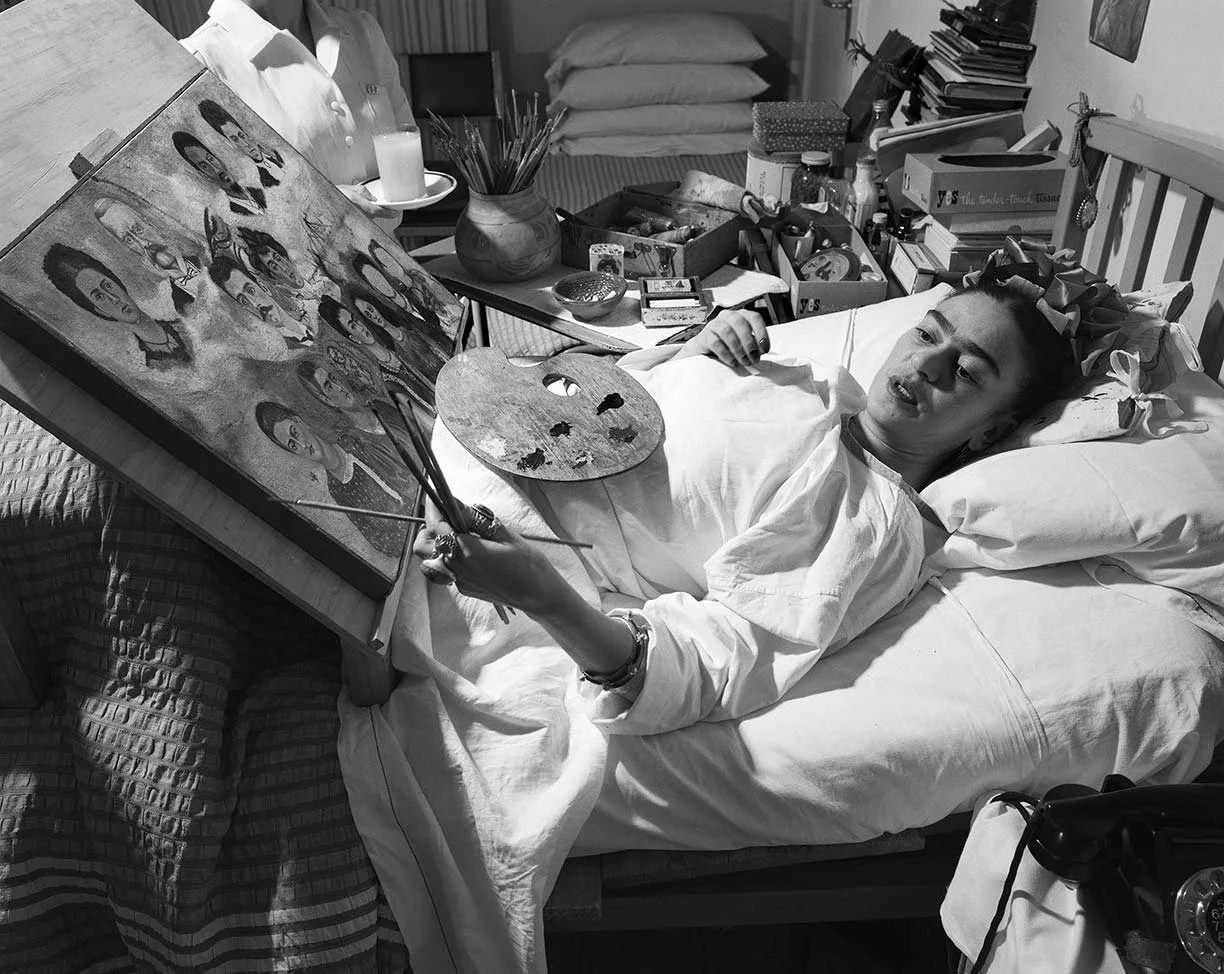
Frida Kahlo painting “Portrait of Frida’s Family”, photographed in the 1950s.